
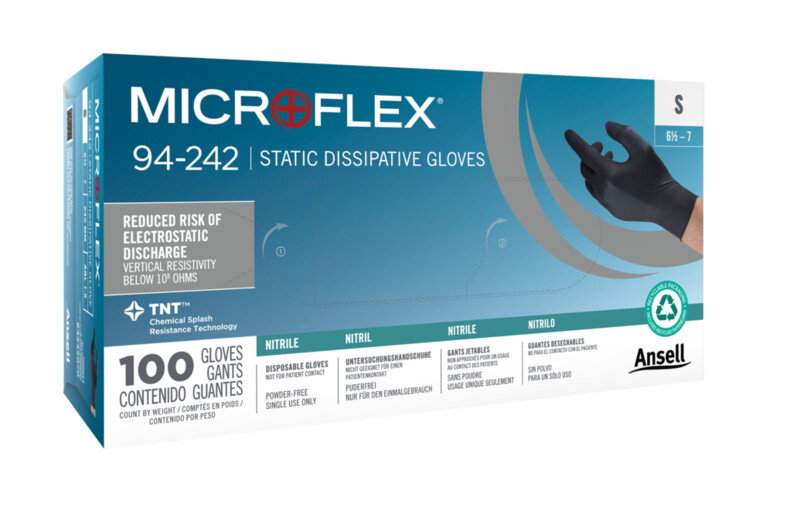
MICROFLEX® 94-242
Original price
22.-
-
Original price
22.-
Original price
22.-
22.-
-
22.-
Current price
22.-
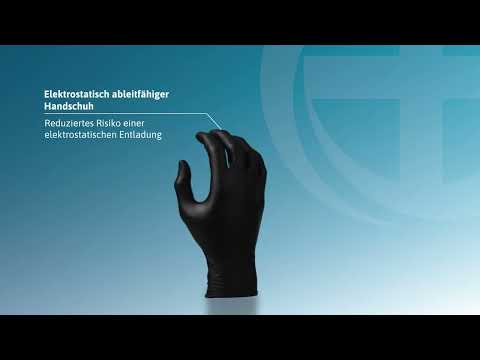
Gloves that reduce the risk of fires, explosions, or damage from electrostatic discharge
Key features and benefits
- Statically dissipative glove: Exceptional protection against electrostatic discharge
-
Proprietary nitrile formulation: For a low vertical resistance below 108 Ω
- TNT™ Chemical Splash Resistance Technology: Enhanced protection against chemicals
Description
- Ansell's first static-dissipating disposable gloves: MICROFLEX® 94-242 gloves reduce the risk of electrostatic discharges that can cause spontaneous combustion in potentially explosive environments.
-
Low vertical resistance: Proprietary nitrile formulation with an engineering material that conducts electricity through the glove polymer, for a low vertical resistance below 108 Ω.
- Enhanced protection: Made with TNT™ Chemical Splash Resistance Technology for soft, lasting protection against a wide range of chemicals.
- Touchscreen compatibility: Offers capacitive and resistive touchscreen capability when working with industrial electronics
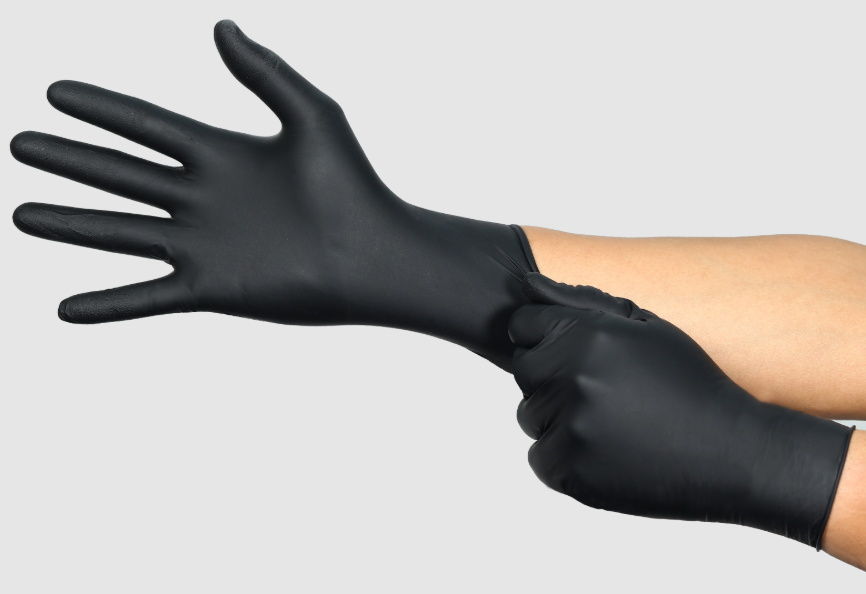
- Improved visibility: The black color provides a contrast to potentially flammable dust while concealing the appearance of oils, dirt, and stains.
Product description
- Material : Nitrile
- Not made from natural rubber latex : Yes
- Color : Black
- Cuff Length : Standard
- Powder content : Powder-free
- External glove surface : Textured fingers
- Freedom from holes (inspection level I) : AQL value 1.5
- Finger thickness (MM / MIL) : 0.16/6.2
- Allergy prevention : Latex (Type I)
- Available sizes : (6.5 - 7), M (7.5 - 8), L (8.5 - 9), XL (9.5 - 10), XXL (10.5 - 11)
- Tested for use with chemotherapeutic agents : No
- Silicone-free : Yes
- Sterile : No
- Antistatic : Yes, EN1149 + EN16350
- Double glove recommendation : Yes, as an outer glove
- Total length (mm / inch) : 245
-
Product segmentation : Robust
Recommended for
- Handling chemicals and cleaning agents
- Working with tools
- Maintenance/repair work
- Handling and processing of food
- Unloading bulk goods
- Shipping, transport and delivery of products
- Packaging and labeling
- Oil, fluid and filter change
- Testing of components and equipment
